
Cloud integration application using Azure Data Stack
Industry: Information Technology, Corporates, Organizations
Project Background
Business Functions:
- Information Technology
- Project Management
- Management
- Human Resources
Challenges: The client, a producer of semiconductor solutions for mobile communication systems, catering to prominent clients such as Apple, Samsung, Huawei, and Xiaomi, encountered several challenges, including:
Laborious Manual Processes: Tasks such as onboarding new employees were overly dependent on manual efforts, resulting in inefficiency and delays in HR operations.
Susceptibility to Errors in Data Transfer: The manual data transfer between various systems and applications was prone to errors, leading to inaccuracies and inconsistencies in critical business information.
Cumbersome Synchronization of Business Data: The manual synchronization of data across different systems proved to be time-consuming and unreliable, causing discrepancies and making it difficult to ensure that all systems contained up-to-date, accurate information.
These issues significantly impacted the client’s operational efficiency, contributing to errors, delays, and challenges in maintaining data integrity across their systems.
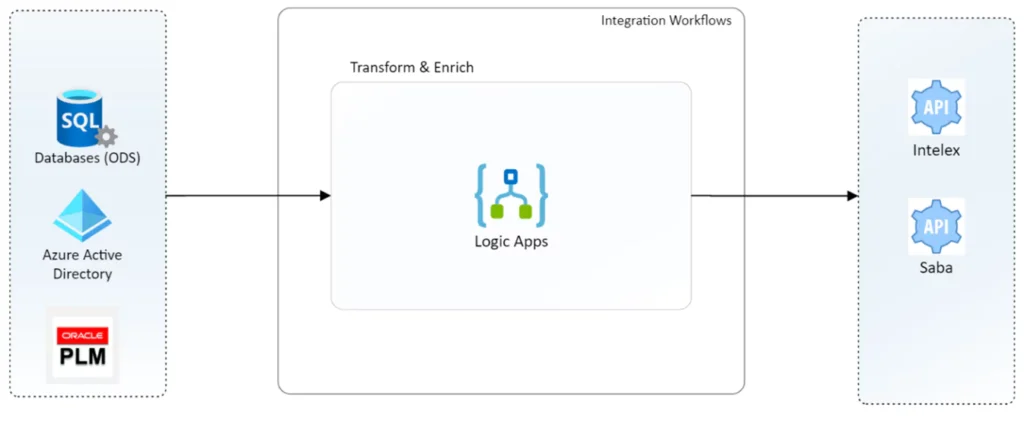
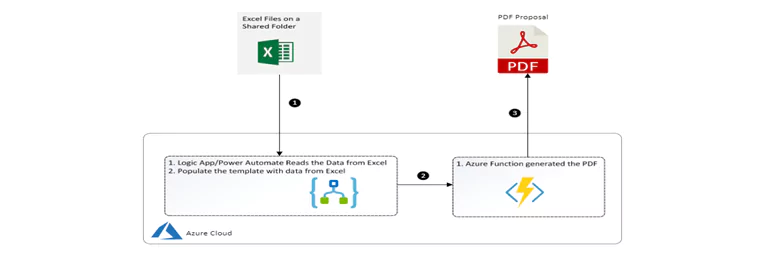
Solutions
Rexaad Engineering proposed the development of Enterprise Integration Applications and Data Pipelines to automate the synchronization and transfer of business records and data, thereby optimizing and streamlining business processes.
To address these challenges, Microsoft Azure iPaaS (Integration Platform as a Service) was chosen as the middleware. This platform facilitated the automated interaction and communication between the various systems, ensuring smooth data flow and integration across different business functions. Azure iPaaS provided the following key benefits:
- Reliability: Ensured consistent and dependable service delivery for critical business operations.
- Security: Offered robust security features to safeguard sensitive business data during transfer and integration.
- High Availability: Provided a highly available infrastructure, ensuring minimal downtime and continuity of business processes.
- Scalability: Enabled the system to scale effortlessly with the growing needs of the business.
- Maintainability: Simplified system management and upkeep, ensuring long-term sustainability.
By leveraging Azure iPaaS, Rexaad Engineering helped the client build data-driven pipelines that automated business data synchronization and transfer, leading to improved efficiency, reduced errors, and a more streamlined operational workflow.
Solutions
To address the client’s integration and data synchronization needs, Rexaad Engineering implemented the following solutions using Microsoft Azure tools:
Azure Logic Apps, Azure Functions, and Azure Data Factory were utilized as integration engines to:
- Transform and enrich data/messages: Data from various sources was transformed and enhanced, ensuring it met the required formats and quality for seamless integration.
- Communicate with HTTP-compliant APIs: The integration tools facilitated communication between systems by interacting with APIs that adhere to HTTP standards.
- Schedule processes: Automated scheduling of processes was implemented to ensure timely execution of business workflows without manual intervention.
- Expose the middleware for system communication: These tools acted as a bridge, exposing the middleware to facilitate communication between disparate systems within the client’s environment.
Azure Storage Accounts were leveraged to:
- Persistently store unstructured data and files: All unstructured data and files were securely stored, ensuring long-term data retention and easy access.
- Host server files for Azure Functions: Files needed by Azure Functions were hosted within Azure Storage, ensuring efficient function execution.
- Leverage out-of-the-box connection services: Integration applications could perform read-write operations on the stored data by using the built-in connection services, simplifying data interaction.
By employing these Azure solutions, Rexaad Engineering ensured that the client’s business data was synchronized, accessible, and securely transferred across various systems, ultimately enhancing the efficiency and reliability of business processes.
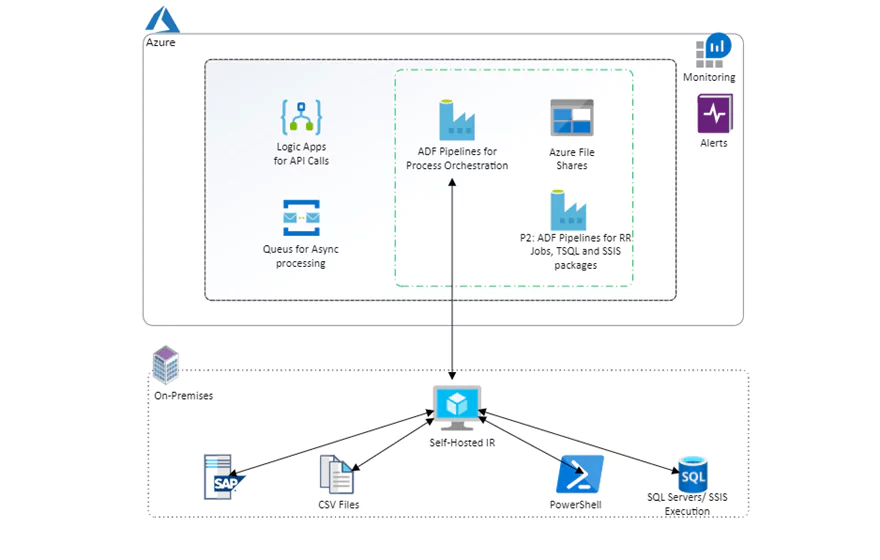
Solutions
Azure Service Bus was utilized for the following purposes:
Message Broker Service and Staging Storage: Azure Service Bus acted as an intermediary for securely and reliably transmitting messages between different systems, while also serving as a temporary staging area for data awaiting processing.
In-order Delivery of Messages and Data: It ensured that messages and data were delivered in the correct order, which is essential for maintaining the integrity and accuracy of business processes.
Azure API Management was implemented to:
Centralize and Manage HTTP-compliant Communication: It provided a centralized platform for managing the communication between internal services, ensuring smooth interactions across various systems.
Standardize and Secure Interfaces: API Management helped to establish standardized protocols for APIs while enforcing security measures, protecting data, and ensuring that only authorized services could interact with internal systems.
These components of the Azure platform enabled Rexaad Engineering to create a robust and efficient integration infrastructure that supported secure, reliable, and scalable communication between the client’s systems, enhancing overall operational efficiency.
Solutions
Azure Log Analytics was used for the following purposes:
Get Log Run Details of Integration Services: Azure Log Analytics collected detailed logs on the execution of integration services, providing insights into the performance and status of workflows.
Implement Easy Querying of Logs for Tracking Purposes: It enabled easy querying of logs, allowing the client to efficiently track, analyze, and troubleshoot integration processes.
Monitor the Overall System’s Run History: It provided a historical view of the system’s operations, enabling the client to review the performance and activities of the integration services over a specified period.
On-premises Data Gateway was employed to:
- Connect Cloud-Hosted Middleware with On-Premises Data Storages and Systems: The data gateway acted as a secure bridge, ensuring seamless communication between cloud-based services and on-premises systems and databases, facilitating hybrid integration.
By leveraging Azure Log Analytics and the On-premises Data Gateway, Rexaad Engineering ensured that the client could monitor and analyze integration processes effectively, while maintaining secure and consistent connections between cloud and on-premises environments.
Results / Benefits:
The solution provided by Rexaad Engineering resulted in the following key benefits:
Automation of Tedious Manual Processes: By automating repetitive tasks, operational efficiency was significantly increased, reducing the need for manual intervention and the risk of human error.
Efficient Business Processes: Streamlined workflows and enhanced data integration led to smoother and more efficient business operations across various departments.
Improved Data Accessibility Across Different Systems: Data became easily accessible across various systems, ensuring that all relevant stakeholders had real-time access to the most accurate information.
Speedy Transfer of Files and Data: The solution facilitated faster and more reliable data transfer, reducing delays and improving the overall responsiveness of business processes.
Minimum Chance of Compromised Data Integrity: Automated data handling, secure connections, and robust protocols minimized the risk of data corruption or loss, ensuring higher data integrity.
Future Integrations Based on Cloud Solutions: The implementation of cloud-based integration solutions provides scalability and flexibility for future integrations, ensuring that the client can adapt to evolving business needs and technologies.
These benefits collectively enabled the client to enhance operational efficiency, improve data accuracy, and ensure scalable, future-ready solutions.
Tech Stack
- Azure: Cloud platform providing the infrastructure and services for scalable integration and automation solutions.
- Logic Apps: Used for orchestrating workflows and automating business processes across various systems.
- Functions: Azure Functions were employed to execute event-driven logic and enhance the automation of processes.
- Data Factory: Utilized for building, scheduling, and automating data pipelines to facilitate data integration.
- Storage Account: Ensured secure, persistent storage for unstructured data, files, and system backups.
- Service Bus: Employed as a message broker to ensure reliable and orderly data transfer between systems.
- API Management: Managed and secured communication between internal services through standardized API interfaces.
- Log Analytics: Provided advanced logging and monitoring capabilities for system performance and process tracking.
- On-prem Data Gateway: Enabled secure and seamless connectivity between cloud-based middleware and on-premises systems.
This technology stack enabled Rexaad Engineering to implement a comprehensive, secure, and efficient integration solution for the client, improving data flow and operational processes across systems.